We're running this campaign with SMALL DONORS only, no PAC money, no BIG DEVELOPER MONEY. Donate now


Meet Jaskirat
A Proven Leader. A True Neighbor. Your Voice.
Jaskirat Singh Sondh is a first generation American Sikh, he has lived in Rancho Cucamonga for close to 20 years. Sondh believes in leadership anchored in listening, action grounded in empathy, and policies shaped by real people. Born and raised in California, Jaskirat is a businessman, pilot, teacher, artist, comedian, and accountant.
Jaskirat Sondh has served our community with one mission: to make your voice heard by improving your quality of life and making it more affordable.
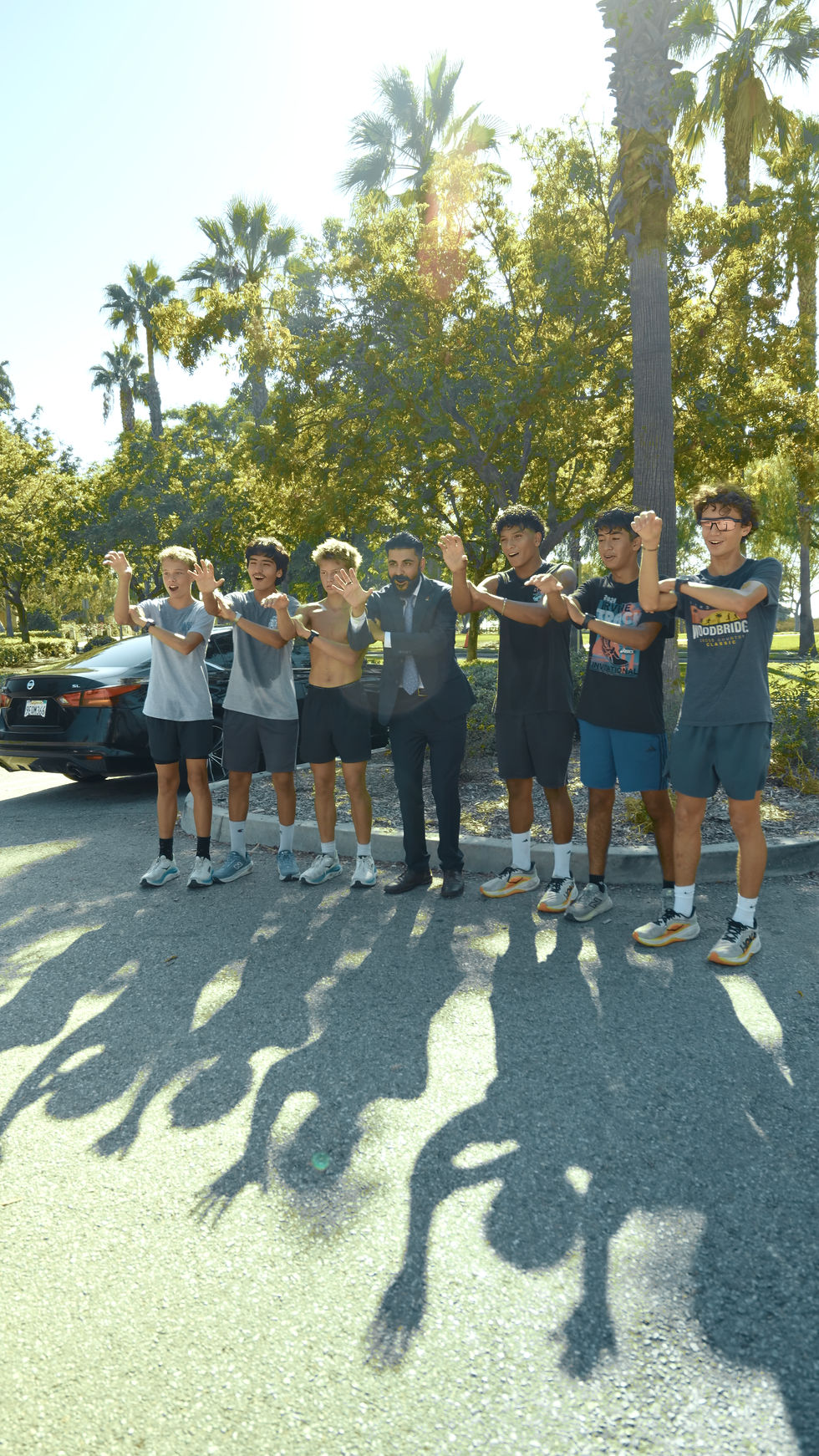
Jaskirat goes directly to the voters and asks them what needs to be fixed in the city.
A Bold Vision. Real Solutions. First Five Priorities As Mayor.
Stop Reckless Overdevelopment and Protect Etiwanda Heights
In 2019, the City Council approved 2,700–3,000 homes on 790 acres in Etiwanda Heights. A developer then quietly doubled that to nearly 6,000 units: including duplexes, quadplexes, and 12-plexes. The Planning Commission approved it over the objections of more than two dozen speakers. The City Council approved it in February 2026. Now, the Rancho Cucamonga Preservation Society is suing the city, alleging CEQA violations, inadequate environmental review, and failure to address wildfire evacuation, traffic, and endangered species. Residents were furious and one called out “Thanks for nothing” as they left the hearing.
Force a full, independent environmental impact report (EIR) not the rushed review the city did.
Roll back density to the original 2,700–3,000 homes the community was promised.
Require wildfire evacuation planning, traffic mitigation, and infrastructure upgrades before any shovels go in the ground.
Hold public hearings in the evening and on weekends so working families can actually attend.
Bring Back Good Jobs and Replace Frito-Lay & Anchor New Employers
Frito-Lay operated in Rancho Cucamonga for over 50 years. In June 2025, it shut down manufacturing, laying off hundreds of workers. Then in February 2026, PepsiCo closed the warehouse too, laying off another 248 workers and bringing the total to 680 lost jobs. That’s a gut punch to working families.
Make job recruitment my #1 economic priority. The mayor is the city’s chief economic ambassador and I’ll use that pulpit to bring in manufacturing, logistics, and green energy employers.
Build on the Reyes Coca-Cola win. Reyes is investing $650 million in a 620,000 sq ft plant employing 500–600 workers, opening early 2027. I’ll recruit more anchor employers like this.
Create a worker transition program: partner with Chaffey College and local unions to retrain displaced Frito-Lay workers for new jobs.
Target industries that pay family-sustaining wages and not just warehouses, but production, tech, and clean energy.
Modernize Public Safety: Drone Program & Emergency Operations Center
Rancho Cucamonga faces wildfires, traffic incidents, and growing emergency response needs. The current Emergency Operations Center (EOC) is cramped, outdated, and located inside the police secure area. The city is also rolling out a drone inspection program but only two pilots are getting FAA certified. That’s not enough.
Champion the EOC relocation: federal funding of $1,034,487 has already been secured to move it to the Civic Center campus. I’ll ensure it’s completed on time and with modern technology for wildfire and multi-agency response.
Expand the drone program: use drones for fire mapping, disaster assessment, and infrastructure inspection. Push for more certified pilots and community transparency on how drones are used.
Advocate for a hybrid fire engine: the city is seeking $1.8 million for a hybrid engine to serve the northern region. I’ll fight for that funding and for first responder health (reducing exhaust contaminants).
Push for real evacuation planning, especially for foothill communities like Etiwanda Heights.
Bring Home State & Federal Dollars: Every Year
Rancho Cucamonga leaves money on the table. We have a Member of Congress on the House Appropriations Committee (Rep. Pete Aguilar) who secured $19.7 million for 15 projects in the district. We should be first in line for more.
Aggressively pursue Community Development Block Grants (~$1 million/year) for neighborhood revitalization, senior services, and youth programs.
Partner with Rep. Aguilar to bring more federal dollars for transportation, housing, and climate resilience.
Go after state funding for EV charging infrastructure, affordable housing, and workforce development.
Create a dedicated grants office in the City Manager’s office to track and apply for every available dollar.
Fix the Broken Stuff: Animal Services, Parking, Potholes
The city has a shelter veterinarian vacancy crisis: Animal Services is understaffed and struggling. Parking enforcement is inconsistent. Roads have potholes. These are the things residents complain about every day.
Fix Animal Services: recruit and retain veterinarians with competitive pay, expand spay/neuter programs, and improve shelter conditions. Ensure we have our own 24/7 Animal Hospital in case of pet related emergencies.
Reform parking management: the city recently adopted a Parking Authority. I’ll make sure it actually works: centralized permit sales, fair enforcement, and weekend coverage expanded to seven days a week. I will also work to add more free parking at the Metrolink.
Launch a “Pothole Patrol”: set a 48-hour response time for reported potholes. Use the city’s new drone inspection program to identify road damage before residents complain.
Clean up corridors: proactive enforcement of nuisance conditions, vacant properties, and code violations.
“ Affordability Should Last Generations, Not Just At The First Sale! ”
-Jaskirat Sondh
Affordability And A Better Quality Of Life Is A Policy Choice. Key Policies As Mayor.
Establish a Tenants Protection Office
Give people free legal advice, free mediation and know your rights information.
Establish Tenant Unions
An organization formed and led by renters themselves to fight for their collective rights and interests. They can exist at different levels, within a single building or complex, across multiple properties owned by the same landlord, or across an entire neighborhood or city. Its structure is often volunteer-run and funded by small membership dues. The goal is to build collective power to negotiate with landlords and influence government policy on housing issues. How it works is we find interested neighbors to form an initial organizing team, reach out, hold an assembly, and formalize. In some cities, you can formalize a tenant association by getting signatures from tenants in at least 50% of the occupied units and notifying the landlord. Rancho Cucamonga has no such ordinances.
Fast And Free Buses For All
A direct benefit to low-income residents, seniors, students, and people with disabilities. Through the use of the general fund, a small sales tax measure, or by reallocating existing transportation dollars we can make this a reality. Because Omnitrans is a joint powers agency the city would need to negotiate with the other 14 member cities and the county to make this happen. A free bus program for Rancho Cucamonga is financially achievable especially if approached as a pilot or in partnership with other cities. Omnitrans budget is 118.5 million dollars a year, a proportional cost of Rancho Cucamonga’s share, based on revenue, would be 1.5 million dollars.
Provide direct lines between Victoria Gardens to Haven City Market on weekends to reduce congestion on roads.
Housing For All And Establish The Rancho Cucamonga Community Land Trust
Using the Vienna Model would be a powerful way to create permanently affordable housing, separate from low-income housing or section 8 housing which are privately owned, these are city owned apartments similar to Lewis Apartment Communities, we would offer rents ranging from 500 to 1000 dollars per month based off square footage costs, which in Vienna, are 62 cents per square foot. This would not only stabilize the housing market but ensure there is actual competition to the greedy landlord class exploiting the working class of Rancho Cucamonga. If there is no public housing available the greedy landlord class will expropriate as much capital from the working class as possible, whereas, the government, is not profit-seeking. Our costs are your costs, we do not seek to profit from housing. These units would first be doled out through a lottery system for residents of Rancho Cucamonga to ensure fairness in housing.
This would put a key piece of my platform into action. A CLT is a nonprofit that buys land and keeps it in trust for the community forever. It separates land (held by the trust) from the building on it (sold or rented to residents), ensuring homes stay affordable for generations. We do the same for commercial properties such as office buildings, small businesses, and other sectors of the economy to protect local businesses from displacement and create permanent affordable commercial spaces. Mandate community benefits from large development projects, in the case of the Etiwanda Heights, if the project is to continue then it must include a percentage of units put into the Rancho Cucamonga Community Land Trust to ensure permanent affordability. Developers must hire locally using project labor agreements, pay a living wage while providing local workforce training and apprenticeships. For projects, like Etiwanda Heights, they must also preserve open spaces, new parks, and “green building standards” while providing walkable streets and community WiFi. They must also contribute to a community fund for services like healthcare, childcare, and legal aid for renters. These are not just benefits for residents, but reparations for past extractions. If developers profit from our land, they must build our future with good jobs, homes we can afford, and a healthy environment for all.
This will also reduce the houseless/homeless population in Rancho Cucamonga. The reason we have seen an uptick in the homeless population is because life in Rancho Cucamonga is becoming unaffordable.
Secure State Grants for Worker-Owned Cooperatives
We must democratize the economy by pushing development of worker owned businesses. The SEED (Social Entrepreneurs for Economic Development) program alone has already distributed millions of dollars to support cooperative formation, training and capacity building with a focus on excluded workers in low-wage industries. The city could create its own micro-grants for legal fees, equipment, member buy-ins, and training while using SEED’s proven framework as a model to expand worker-owned cooperatives.
Project Labor Agreements
Ensure union labor on city construction. Enact a council ordinance for all city-funded projects.
Prevailing Wage Ordinance
Extend wage standards to private projects. Ordinance conditions approvals on prevailing wages.
Labor Peace Agreements
Protect organizing at city-subsidized businesses. Require LPAs in development agreements and leases.
Require the City to Use its Purchasing Power to Support Unionized Businesses
The city will only purchase its necessities from unionized labor. This will directly put money back into the hands of laborers instead of greedy owners.
Tuition Free College For All
Partner with Chaffey College for free community college to cover tuition for Rancho Cucamonga residents using a portion of the city’s general fund. This program will be separate from the Panther Promise program.
Municipal Broadband For All
Treat the internet as a public utility. In 2018, the city and Onward entered a formal partnership to initiate, operate, and manage the city-owned network. Their role as the ISP is to handle customer service, marketing, and the technical operation of providing internet access to residents and businesses. We will build and expand the city-owned fiber optic network to break the monopoly of private ISPs and lower costs for working families. The city already has 70 miles of its own fiber optic cables in the ground; this existing network will be utilized as the backbone for expansion into a municipal broadband system. The revenue model will be similar to other cities that already have municipal broadband services like Chattanooga which offers services for 1 Gbps internet for $68 per month and 300 Mbps for $58 per month. This program will pay for itself and in the future increase city revenues.
Expand the Rancho Cucamonga Municipal Utility Company (Electricity Company)
This is the crown jewel of Rancho Cucamonga’s public utilities, the City already owns it. Expand the RCMUC service territory across all of Rancho Cucamonga. Publicly owned electricity is cheaper and more accountable. The average residential bill is roughly $40 in comparison to the state average of $160. That is 83% lower. Expand net metering for rooftop solar which RCMU already offers. Push for 100% renewable energy procurement, since the RCMU buys it wholesale we can direct it to buy from clean sources. Not only will this be a utility owned by the public it will provide good paying union jobs.
Push the Cucamonga Valley Water District to explore Public Ownership
Currently the CVWD is a special district which makes it an independent unit of the local government. It is not part of the city government, but it is still public. We must use the bully pulpit to advocate for CVWD to expand low-income water rate assistance programs. Partner with CVWD on water conservation projects and push for more aggressive lead pipe replacement and water quality testing. Ultimately, we must push CVWD into a public ownership model as we have done with the RCMUC.
Push for a Publicly-Owned Gas Company
Municipal gas utilities are already an established model within California such as Long Beach and Palo Alto. Pathways to achieving this would be the Voluntary Purchase which is the most straightforward, amicable route. The city and the utility company negotiate a sale price for the local gas distribution assets. If this fails, use Eminent Domain and force an acquisition. Cities have the authority to acquire property for public use, California Government Code § 57415, allow a city to assure control of gas plants. Pushing for public utilities across the city will increase affordability for all, decrease prices for all, and provide unionized labor for all.
Free Childcare
California already has a large subsidized childcare system. A city pilot could build on this by using state funds and eligibility rules as a foundation. Funding could come from a combination of the city’s general fund, federal grants such as the American Rescue Plan Act, and state grants to launch a $2-3 million annual pilot for hundreds of slots. This could be as simple as a partnership between the city, the local school district, and philanthropic organizations. We start small, between 50-100 low income families with children aged 0-3. This allows the city to manage costs, gather data, and build momentum to expand the program.
Expand Micro-Lending Programs
Partner with the Small Business Development Center (SBDC) to establish and expand a city-backed microloan fund, specifically for loans under $50,000. This will provide crucial capital for startups and small expansions without the burden of large debt.
Establish a Small Business Grant Program
Use a portion of the city’s federal funding, approximately $5 million in ARPA funds, to create a grant program for small businesses. This would help with storefront improvements, digital marketing, or purchasing equipment.
Raise the Small Business Tax Exemption Threshold
Follow the lead of other California cities, explore raising the threshold for the city’s business license tax exemption. Exempting more small businesses from this tax reduces their overhead and encourages new business formations.
Fast-Track Permitting and Reduce Permitting Fees for Small Businesses
Create a dedicated fast-track for qualifying small businesses, e.g. under 4,000 sq. ft. This would move from plan to construction in a fraction of the time. Self-certification for professionals which would allow pre-approved licensed professionals to “self-certify” their plans for simple tenant improvements (non-structural changes, light electrical/plumbing). This cuts out the normal plan review process. Eliminate “Change of Use” permits, remove the requirement for a new permit when a business changes from one permitted use to another (e.g. a retail space becoming a restaurant). Create a “One-Stop Shop” by establishing a single point of entry for all permit applications.
Community Oversight for Law Enforcement and Removal of ALPR Cameras
Establish a truly independent and free from outside influence civilian review board with subpoena power and the ability to discipline officers.
We will also get rid of any and all ALPR (Flock) Cameras within our city. They are a severe infraction of privacy rights that do not increase safety. The people of Rancho Cucamonga have a right to privacy and we will ensure those rights are protected without the need of mass surveillance.
Fix the Parks and Trails
Fix and add lightening to the parks. Fix the soap dispensers in park restrooms. Fix the broken equipment at our current parks like the broken playsets at Beryl Park. Plant more trees for actual shade coverage not just in the parks but along walking trails so it is more tolerant on warm to hot days while also doing the same at the local dog parks.
Fix the Sidewalks and Horse Trails
Make the sidewalks and horse trails continuous where they are not. Spotty development has created gaps that make transversing specific areas challenging, with the only prospect waiting for a developer to slap another 100 houses on the parcel to finish a narrow stretch of concrete.
Expand the Protected Bike Trails and Enforce Bike Lane Usage
Continue the addition of protected bike trails across all of Rancho to make corridors from all major communities. Continue to expand protected bike lanes in the streets and make them continuous across the city. Enforce the usage of these bike lanes whether they be peddled bikes or eBikes.